Tuesday, December 10, 2019

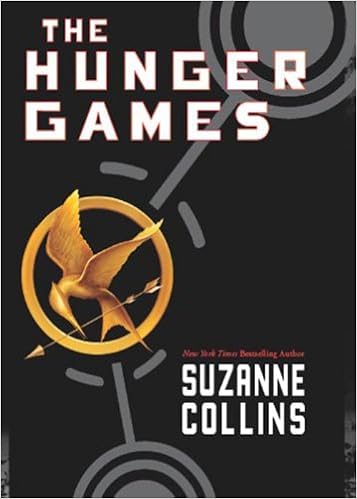
The Hunger Games

“You don’t forget the face of the person who was your last hope” (Collins 2008)

To finish out the 20 Book Challenge, I decided to end the semester with one of my all-time favorite books, The Hunger Games. I remember when this book first came out. I was in middle school, and my librarian told one of my classes about it. We all rushed to check it out, and I was one of the lucky people who got to read one of the first copies. I immediately fell in love with the book and finished the entire series as it came out, as well as the movie adaptations. This book will forever be one of my favorites.

After an uprising of citizens, the 12 Districts of Panem must each send 2 teenagers to fight to the death in the annual Hunger Games, a brutal deathmatch that takes place in the Capitol. In District 12, Katniss Everdeen volunteers for her sister, whose name is drawn at the ceremony. Peeta Melark is also drawn, and he and Katniss know each other. The two travel to the Capitol and take place in the ritualistic training, interviews, and dinners. On the night before the games, Peeta confesses his love for Katniss during an interview. This changes everything, and all the citizens of the Capitol are now rooting for the star-crossed lovers. As the games begin, the tributes slowly die one by one. It is then announced that there may be two winners, as long as they are from the same district. This causes Peeta and Katniss to reunite and play up their "lover" appearance. The two ultimately end up as the last two survivors, but the Gamemakers then announce they are revoking the new rule. Katniss and Peeta decide to both eat poisonous berries to end the games. Before they can eat them, the Gamemakers quickly take back their change and announce the two as the winners. They travel back home, and Katniss questions whether or not she truly loves Peeta.

As I said before, this book is one of my favorites. It has everything you could ever want in a book: action, romance, comedy, and tragedy. I feel that this book would be perfect to include within your classroom, especially to teach it. It has several different themes that you could teach to your students, such as poverty, sacrifice, and war.  I feel that this book would be a great way to liven up your reading time. One fun idea would be to set up your own Panem in the classroom, minus the brutal killings and economic divides. Each district would be in charge of a certain resource, just like the book. Everyone can work together to create an ideal society, far from the one seen in the book. You can also use this book to teach literary concepts, such as foreshadowing and imagery.

If you haven't read this book yet, I highly recommend you do. It has everything you could want in a book, and I know I will forever have a love for it. I will definitely be using this book inside my classroom. 

Tuesday, December 3, 2019

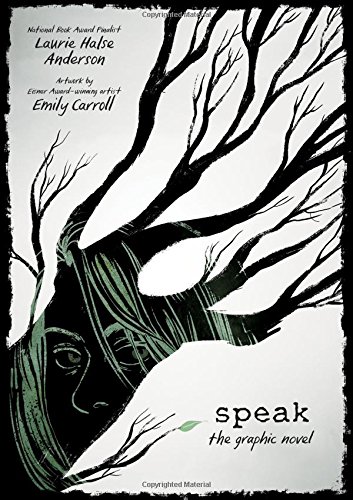
Speak

“Art without emotion is like chocolate cake without sugar. It makes you gag” (Anderson 2018)


The 20 Book Challenge is coming to a close, so I am trying to fit in the last of my books within the next couple of weeks. This week, I wanted to read another graphic novel. I really enjoyed Hey, Kiddo, which I have made a previous post about. I decided on Speak by Laurie Halse Anderson. I have read the original version before and really enjoyed it, but I think I liked the graphic novel version better.

This book deals with very serious subject matter. In the summer of her freshman year, Melinda decides to attend a party, where she meets a boy named Andy, who is a senior. Andy rapes Melinda, who is left in shock. She tries to call the police, but she finds herself unable to speak. This event causes Melinda to become completely mute with no way of expressing her feelings. She turns to art to express how she is feeling. She becomes weighed down with trauma and becomes even more withdrawn and depressed. By the end of the book, Melinda is able to tell her ex-best friend about the incident. Andy tries to attack Melinda, but she is able to fight back and get help. The truth spreads around the school, and the students become more understanding towards Melinda. 

While the topics within the book are difficult to discuss, I believe it could help some students. Melinda deals with post-traumatic stress disorder, something that many people have to deal with. Some students may benefit from reading about a character who is going through similar things as them. This book, whether it be the original or graphic novel version, can help students find their own voices, just as Melinda found hers. 

One more week to go! Check-in next week for my last book post!  

Tuesday, November 12, 2019

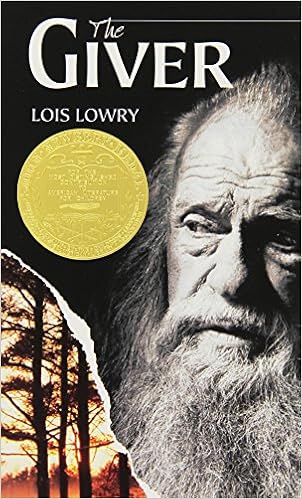
The Giver

“The worst part of holding the memories is not the pain. It's the loneliness of it. Memories need to be shared” (Lowry 1993)


Most people have to read The Giver in middle or high school in one of their English classes. For some reason, I never had to read it in a class, so I never read it at all. I always thought it would be boring and way over my head. This week, I decided to sit down and finally give this book a chance. I'm happy to report that it blew my mind and exceeded my expectations!

Jonas lives in a world where there is no access to books other than schoolbooks and a rulebook. There's no color, music, or knowledge of the past. Everyone in this society is given a specific role in the community when they turn 12. This day approaches quickly for Jonas, and he and his peers are assembled. Jonas's turn is passed when the time comes, and everyone is assigned to their roles except for him. Once he is alone, he is told that he would be the new Receiver of Memory. He begins his training and is told he must lie and withhold information from his friends and families. The Giver shows Jonas everything he has missed out on, such as emotions, memories, and rainbows. He also shares some negative feelings and memories as well. As Jonas continues his training, he begins to learn more about his society and the truth behind it all. He comes to realize that not everyone can be trusted. I will stop the summary there to not give too much away. This book should be experienced as a whole!

The author of this book, Lois Lowry, does a fantastic job of including imagery throughout the novel, especially when writing the scenes between Jonas and the Giver. Jonas is experiencing many new things while gaining memories, and the readers must understand what and how he is feeling during these memories. My favorite example of this is when Jonas experiences snow for the first time. Lowry uses words like "featherlike" and "whirling" to describe the scene and put the readers in Jonas's shoes. Of course, Jonas has to experience negative things as well, such as war. Lowry uses just as strong of language to describe these scenes as well. I think this book would be a great mentor text to use when teaching your students about adjectives, imagery, and creating scenes.

I'm very happy I finally got around to reading this book. I really regret putting it off for so long. I highly recommend this book to anyone looking for their next great read. It's powerful and emotional, as well as engaging and creative. It's a great read for readers of all ages!

Tuesday, November 5, 2019

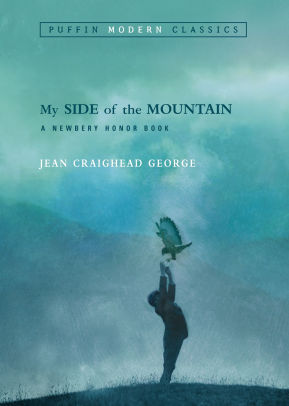
My Side of the Mountain

“Fortunately, the sun has a wonderfully glorious habit of rising every morning” (George 1959)


This week, I went back to my fifth-grade classroom and dove into the popular novel My Side of the Mountain. I remember loving this book when I was younger, and it honestly lived up to what I remember.

Sam is unsatisfied with his life. He and his very large family live in a crowded apartment in the city, but he longs for the woods and fresh air. Sam comes up with the idea to go stay on great-grandfather's abandoned farm near a small town nearby. He begins to study survival and skills at his library, then tells his parents of his plans. His father allows him to go but believes he will be back in a few days when he gives up. Sam takes a bus to the nearby town, then sets out on foot into the woods. He fails to find the cabin first, but he meets a kind man to teaches him how to build a fire. When he finally finds the cabin, he sees that only the foundation is left. He decides to hollow out a tree to sleep in and sets up camp. As the book continues, Sam uses traps to catch food and catches a falcon that he trains to hunt. He meets a few people during his stay that lasts through multiple seasons. In the end, Sam's parents visit his camp and decide to build a family home on the land.

I would love to include this book in my classroom if I have a higher grade, such as fourth or fifth grade. The book is set up so it reads like a journal, with Sam detailing his day and the events. This book would be great to introduce in a personal narrative or journaling lesson. Students can get ideas and inspiration from reading this book and want to write about their own lives and adventures. This book could even inspire students to create their own stories and write them in a similar fashion.

I loved this book then, and I still love it now. I highly recommend this if you're looking for a next book to read! 

Tuesday, October 29, 2019

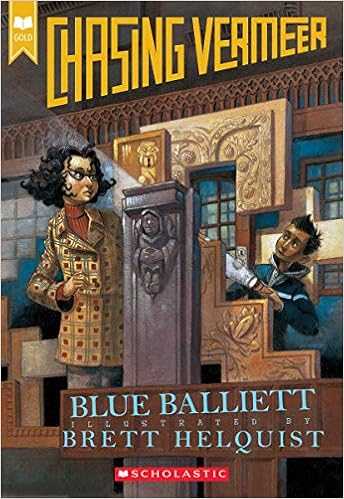
Chasing Vermeer

"Do not be afraid to go against what you were taught, or what you were told to see or believe. Every person, every set of eyes, has the right to the truth" (Balliett 2004)

I've officially read my favorite book of the challenge so far. "Chasing Vermeer" was unlike any of the books I have read this far, and it definitely made a lasting impression on me. This book would be an excellent inclusion for a classroom for upper elementary students. It incorporates all different subjects, such as art, history, math, and science.

The mystery takes place in Chicago near the University of Chicago. Two best friends, Calder and Petra, become mixed up in a town scandal when a painting by Johannes Vermeer is stolen while on the way to the Art Institute. Using articles in the newspaper, the thief tells the city that they will return the painting if someone cracks his code. The community must figure out which of Vermeer's paintings were actually done by him. Calder and Petra accept the task and look for the painting using various clues.

Throughout the book, there are several codes that the reader must solve while reading. These codes involve pentominoes and frogs hidden in the illustrations. The readers can count the number of hidden frogs in every other illustration, as well as find the hidden pentomino. Each pentomino corresponds to a letter. The letter and the number of frogs can be used to decode a secret message.

This book is so interactive and incorporates many different subjects. I can see this book being used in a 3rd to a 5th-grade classroom in a math unit. Pentominoes are a fun math manipulative that students love to use. Incorporating them into decoding messages is a fun way to make the book come to life for the students. This book can also be used for a history or art lesson. It discusses different artists and painting styles, as well as the history behind them. 

 This book has 3 sequels, and I definitely plan to read these next. I hope they are just as fun as this one. If you're looking for your next book to read, I definitely recommend this one!

Tuesday, October 15, 2019

Hey, Kiddo

“Stories keep memories alive and people real to us" (Krosoczka).


A few more books down this week! I read a few Judy Moody and Goosebump type books, just for fun. I loved these kinds of books growing up, so it was good to go back to my childhood a little. One book I read was Hey, Kiddo. This graphic novel sent me on a rollercoaster of emotions I definitely was not prepared for.

Growing up, Jarrett had anything but a normal, happy childhood. Early on in his life, his mother kept getting into trouble, whether it was for shoplifting or with bad guys. His father was not in the picture at all, either. Because of this, Jarrett goes to live with his grandparents. His mother is in and out of his life, and Jarrett grows unattached to her. He finds out that she is a drug addict and has landed herself in jail. All while this is happening, Jarrett begins to love drawing and comics. His grandparents are dealing with their own issues as well, such as drinking and gambling. As the story goes on, readers can see Jarrett grow from a child to a teen with a passion who is graduating high school. There are so many twists and details I don't want to give away, so I'll stop there.

This book deals with tough issues, such as addiction, growing up, and absent parents. Every reader can find something they relate to within this book, whether it be a character, emotion, or situation. Introducing this book to students of older age, such as high schoolers, could truly impact their lives. You can never truly know what is going on in a student's life, so this book could act as a lifeline to students. It shows that they are not alone, and other people go through the same trauma as they do. The ending of the book, for me, was the most emotional. As Jarrett is graduating, he comes to realize that family is who you make it. He expresses his love and gratitude for his grandparents, who have always been there for him. He finds his dad and his half-siblings and develops a relationship with them. it just shows that no matter what you go through, you will always have people who love you.

Well, that's it for this week! I can almost see the finish line of books! Tune in next week to see what I read next!

Tuesday, October 8, 2019

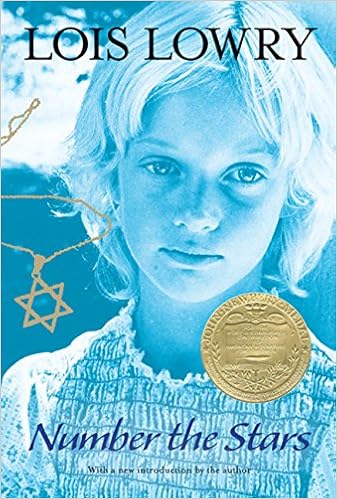
Number the Stars

“The whole world had changed. Only the fairy tales remained the same" (pg. 47)


I remember reading this book in 3rd, maybe 4th grade. It was a required book, so I didn't take it very seriously. I only read the assigned chapters, completed the worksheets, and took the tests. Rereading this book later in my life really threw me for a loop. This book deals with a real-life tragedy that some children, like myself, may not understand.

Annemarie and her family live in Copenhagen in the midst of Nazi occupation in Demark. She and her best friend, Ellen, live in a large apartment building. They have their first encounter with German soldiers on their way home from school, and the interaction leaves them both unsettled. This is because Ellen and her family are Jewish. As time moves on, they begin to notice more and more things in their neighborhood are changing. It begins with Jewish shops closing. Then, Ellen's family is forced to flee, leaving Ellen in the care of Annemarie's family. The family travels to an uncle's home, where Ellen is reunited with her family. That night, the uncle manages to hide Ellen's family in a boat, which allows them to travel safely to Sweden, which is a safe spot for the Jewish family. By the end of the book, the war ends, and Annemarie awaits her best friend's return.

This book is a great look into World War II through the eyes of a young girl who can be relatable to the young readers for whom this book was written. The child-like writing and narration make you feel like you are Annemarie, living out the story that is told. This can get readers more involved in the story, which can help their critical thinking. They begin to wonder what it would be like if they really did live during the events.

Along with the writing, the book does a great job of teaching tough topics. Aside from the overarching Nazi/war conflict, there are a few dark themes that arise. The most prominent is loss. Early on in the book, it is mentioned that Lise, Annemarie's older sister, is dead. Annemarie believes she died in an accident years ago. She was engaged to marry Peter, an outgoing and fun man. However, towards the end of the book, Peter is killed by the Germans because he was a member of the Resistance. Annemarie's parents reveal that Lise was also a member of the Resistance, and she too was killed by German soldiers. This is not the only kind of loss included in the story. Annemarie has to watch her best friend's parents flee, then has to watch her friend leave as well. This topic comes into life more than we'd like, and this book gives great insight into the topic.

The ending, in my opinion, was great. It is never revealed if Ellen's family made it to Sweden safely or if they'll return to the neighborhood. This leaves readers wondering about the family, and they can even come up with their own resolution. I love endings like this because it keeps everyone guessing. 

Almost halfway to my goal of 20! Stay tuned for next week's book!

Tuesday, October 1, 2019

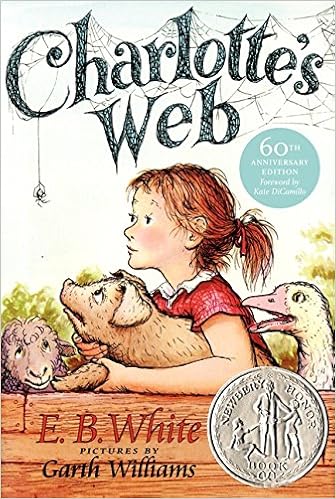
Charlotte's Web

"All these sights and sounds and smells will be yours to enjoy, Wilbur - this lovely world, these precious days..." (pg. 164).


This week, I read a few books. I read The Boxcar Children by Gertrude Chandler Warner and The Haunted Mask by R.L. Stine. These books were very enjoyable to read but did not hold any deeper messages to discuss. I also read the classic Charlotte's Web by E.B. White, which is the topic of this week's review!

This book begins with the birth of a litter of pigs, with one of them being a runt. Instead of killing him, Fern's father allows her to raise the pig on a bottle. She does this for a while, but Wilbur gets too big to keep at their house. She sells the pig to her uncle who lives down the road. Fern visits Wilbur and his new farm friends every day. One day, Wilbur learns he may be killed for food. Fearful for his life, he turns to Charlotte, who is a spider. She assures him that she will solve the problem. She decides to make Wilbur look like a show pig by weaving positive words about him into her web. The farmer buys into this and takes Wilbur to the fair. He wins the show, but sadly, Charlotte is too weak to come home with them. Wilbur takes her egg sac back to the farm, where Charlotte's babies hatch.

I remember reading this book as a young child and weeping over the death of Charlotte. This book was probably by first insight into the circle of life, and it will forever hold a spot in my heart. Like my first book, Bridge to Terabithia, this book deals with the topics of friendships and death. In the book, Wilbur has a hard time making friends at first, but he eventually finds his way into some lives. The readers get attached to these friendships and bonds that are made. Sadly, one of the most loved characters dies in the end, and readers are left feeling hopeless like Wilbur. This book, in my opinion, should be introduced into the classroom early on.

So, 5 out of 20 books down! Next week, I plan to review Number the Stars by Lois Lowry. Stay tuned!

Tuesday, September 24, 2019

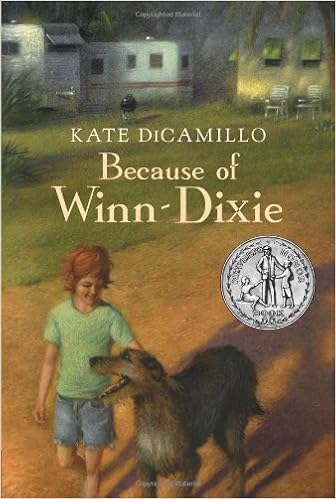
Because of Winn-Dixie

“There ain't no way you can hold onto something that wants to go, you understand? You can only love what you got while you got it” (pg. 159). 


This book was very popular in my fourth-grade class because of the movie adaptation, but I never got around to reading. I heard various reviews about it, mostly saying that it was sad. This scared little 11-year-old me into not reading it. That is, until now. I am happy to say I loved this book, and it wasn't as sad as people were making it out to be.

This story follows India Opal, a young girl who has just moved to a small town, away from all of her friends. She only lives with her dad due to her mother leaving them when Opal was only a baby. She has a hard time making friends, so she is very lonely at the beginning. One day, while going to the grocery store, she finds Winn-Dixie, who is a skinny, scrappy mutt who loves to get into trouble. With the help of her newfound friend, Opal meets many new friends around her town, such as the librarian, a pet store manager, and a "witch". The book ends on a happy note, with Opal and all her new friends at a party enjoying some music, pickles, and Litmus Lozenges. 

Including this book in your classroom would be very beneficial to your students. The first tough topic it covers is parents leaving. Early on in the book, it goes into detail about how Opal's mother left. This topic, while difficult to discuss, can really open up conversations to students who have dealt with this in their personal lives. Sometimes, kids can have a hard time expressing their feelings. If they find a character dealing with the same thing, the connection can bring out their struggles and help them cope. Another topic this book deals with is making friends. In school, making social connections and collaborating are extremely important. However, this can be hard for some people, like Opal. This book can be relatable to students who are having struggles with making friends and can offer support to them.

This book was definitely 5/5 paws for me! It was a cute story with deeper meanings that are helpful to students. I constantly felt myself smiling throughout the story and felt warm after reading it. 

2 out of 20 books down! Tune in next week to see what my next book adventure will be!

Tuesday, September 17, 2019

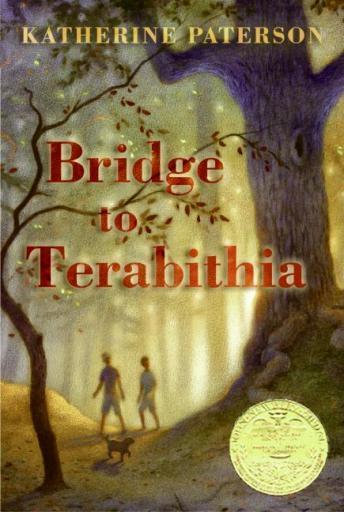
Bridge to Terabithia (SPOILERS)


“Sometimes it seemed to him that his life was delicate as a dandelion. One little puff from any direction, and it was blown to bits” (p 77)


I will preface this by saying I apologize if I spoil the ending of this book for anyone wanting to read it. Even if it's spoiled, you should still read it. It's something you will never forget.

I never read this book in school, nor did I watch the movie adaptation of it. I honestly hadn't thought about reading it until I was introduced to it in another class. It sounded like something I would enjoy, so I decided to read it as my first book of the 20 Book Challenge. I was not ready for the emotional rollercoaster it sent me on.

A quick summary: Leslie moves into the house next door to Jess, and they become friends. The two find a spot in the woods by their houses and create a new magical world called Terabithia, where they rule as king and queen. They use this new world to escape the reality of their lives, but they soon come to realize that they cannot always escape. One stormy day, Jess goes on a trip with his music teacher without telling anyone. (SPOILER) When he returns, he learns that Leslie had drowned in the river trying to return to Terabithia on her own. He denies his grief but soon has to accept her death and mourn. 

I was not expecting this from a children's book! I was in tears for the last third of the book! I couldn't imagine reading this book at a young age. However, as I finally stopped crying over it, I realized why the author wrote this book for a young audience. Everyone deals with grief, even at a young age, but not everyone knows how to cope. This book shows that it's okay to be sad and cry, even if you're a boy like the main character. It's okay to talk about how you're feeling and to hate the world. The book also looks at developing friendships. The two main characters had a hard start, but they eventually found out that they are very similar, so they became friends. This could inspire kids to look for friends in the people they never really considered. 

I encourage everyone of all ages to read this book. It will definitely stick with me.

So, book one down! Only 19 more to go! Check-in next week to read my review of Because of Winn-Dixie.


The Hunger Games

“You don’t forget the face of the person who was your last hope” (Collins 2008) To finish out the 20 Book Challenge, I decided to end t...