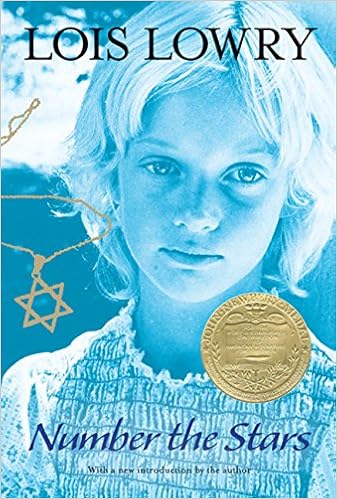
“The whole world had changed. Only the fairy tales remained the same" (pg. 47)
I remember reading this book in 3rd, maybe 4th grade. It was a required book, so I didn't take it very seriously. I only read the assigned chapters, completed the worksheets, and took the tests. Rereading this book later in my life really threw me for a loop. This book deals with a real-life tragedy that some children, like myself, may not understand.
Annemarie and her family live in Copenhagen in the midst of Nazi occupation in Demark. She and her best friend, Ellen, live in a large apartment building. They have their first encounter with German soldiers on their way home from school, and the interaction leaves them both unsettled. This is because Ellen and her family are Jewish. As time moves on, they begin to notice more and more things in their neighborhood are changing. It begins with Jewish shops closing. Then, Ellen's family is forced to flee, leaving Ellen in the care of Annemarie's family. The family travels to an uncle's home, where Ellen is reunited with her family. That night, the uncle manages to hide Ellen's family in a boat, which allows them to travel safely to Sweden, which is a safe spot for the Jewish family. By the end of the book, the war ends, and Annemarie awaits her best friend's return.
This book is a great look into World War II through the eyes of a young girl who can be relatable to the young readers for whom this book was written. The child-like writing and narration make you feel like you are Annemarie, living out the story that is told. This can get readers more involved in the story, which can help their critical thinking. They begin to wonder what it would be like if they really did live during the events.
Along with the writing, the book does a great job of teaching tough topics. Aside from the overarching Nazi/war conflict, there are a few dark themes that arise. The most prominent is loss. Early on in the book, it is mentioned that Lise, Annemarie's older sister, is dead. Annemarie believes she died in an accident years ago. She was engaged to marry Peter, an outgoing and fun man. However, towards the end of the book, Peter is killed by the Germans because he was a member of the Resistance. Annemarie's parents reveal that Lise was also a member of the Resistance, and she too was killed by German soldiers. This is not the only kind of loss included in the story. Annemarie has to watch her best friend's parents flee, then has to watch her friend leave as well. This topic comes into life more than we'd like, and this book gives great insight into the topic.
The ending, in my opinion, was great. It is never revealed if Ellen's family made it to Sweden safely or if they'll return to the neighborhood. This leaves readers wondering about the family, and they can even come up with their own resolution. I love endings like this because it keeps everyone guessing.
Almost halfway to my goal of 20! Stay tuned for next week's book!



Kaylee,
ReplyDeleteI feel like we have very similar taste in books, as this one is also on my list of books I want to read! I think this would be a good books to introduce students to the topic of war and the holocaust period. It is important to give our students knowledge about that time since it was so many years before they were born. I think it is good to put them back in this time period and give them a glimpse of what it was like! I do not like unresolved endings, so I am not sure how I would feel about that, but I still want to read this book!